
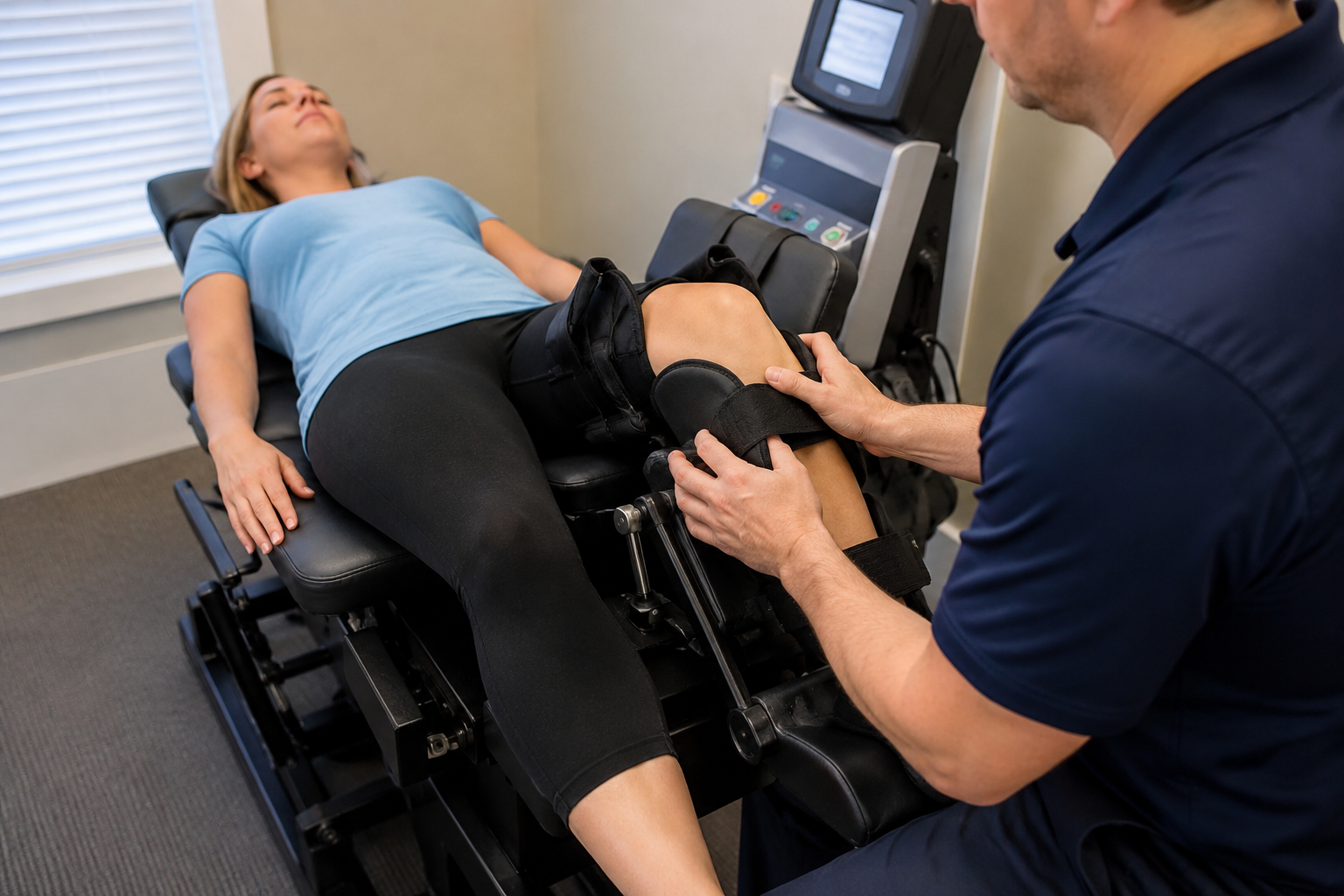
Knee pain can make even the simplest activities feel challenging. Walking through the grocery store, climbing stairs, exercising, playing with children, or standing for long periods can become frustrating when discomfort affects every step. Many people assume that ongoing knee pain automatically means surgery or long-term dependence on medication, but that is not always the case.
At Complete Performance Chiropractic, our goal is to help patients find conservative, non-invasive solutions that support healing and improve mobility whenever possible. One option that has helped many individuals manage chronic knee discomfort is knee decompression therapy. This gentle treatment is designed to reduce pressure within the knee joint, encourage better movement, and create an environment where the body can heal more efficiently.
Whether knee pain developed after an injury, years of athletic activity, repetitive work, or age-related wear and tear, reducing joint stress can make a meaningful difference in daily comfort. Knee decompression is often combined with chiropractic care, rehabilitation exercises, soft tissue therapy, and other personalized treatments to create a comprehensive recovery plan tailored to each patient.
Understanding Knee Pain
The knee is one of the hardest-working joints in the body. Every step places significant force through the joint, and activities like running, jumping, squatting, and lifting increase that load even further.
The knee consists of bones, cartilage, ligaments, tendons, muscles, and cushioning structures called menisci. These tissues work together to provide stability while allowing smooth movement. When any part of the joint becomes irritated or damaged, pain and stiffness often follow.
Common causes of knee pain include:
Osteoarthritis
Cartilage degeneration
Meniscus injuries
Ligament sprains
Tendon irritation
Overuse injuries
Sports injuries
Muscle imbalance
Poor movement mechanics
Previous knee surgery
Chronic inflammation
Sometimes the pain develops suddenly after trauma. In other cases, symptoms gradually worsen over several months or years. To learn more about how we diagnose these issues, you can explore the conditions treated at our clinic.
Why Joint Compression Matters
Every time the knee bears weight, pressure is distributed throughout the joint surfaces. Normally, healthy cartilage absorbs these forces while allowing smooth motion.
However, injury or degeneration can reduce the natural spacing within the joint. As cartilage wears down or inflammation develops, bones may begin experiencing greater mechanical stress. According to the Mayo Clinic, proper joint alignment and load distribution are critical factors in preventing long-term knee degradation.
Joint compression may contribute to:
Pain during walking
Morning stiffness
Swelling
Limited flexibility
Clicking or grinding sensations
Difficulty climbing stairs
Reduced athletic performance
Reducing excessive pressure is often one important piece of improving function without invasive procedures.
What Is Knee Decompression?
Knee decompression is a gentle therapy designed to reduce compressive forces acting on the knee joint.
Rather than forcing movement, decompression carefully creates controlled separation within the joint. This process helps decrease pressure on irritated tissues while promoting healthier joint mechanics.
Many patients describe the treatment as relaxing rather than painful.
Unlike aggressive manipulation, knee decompression focuses on creating a more comfortable environment for healing by minimizing unnecessary stress placed on damaged structures.
The goal is not simply temporary pain relief. Instead, treatment aims to improve how the joint functions over time.
How Knee Decompression Works
Healthy joints rely on movement for nourishment.
Cartilage does not have its own direct blood supply. Instead, nutrients move through joint fluid as the knee bends and straightens throughout the day.
When joint compression becomes excessive, circulation of this nourishing fluid may become less efficient.
During decompression therapy, gentle distraction forces help:
Reduce pressure inside the joint
Improve joint mobility
Encourage fluid exchange
Support healthier movement
Decrease mechanical irritation
Allow surrounding muscles to relax
When combined with strengthening exercises and proper rehabilitation, patients often experience meaningful improvements in comfort and function.
Conditions That May Benefit from Knee Decompression
Not every knee condition is identical, which is why every patient begins with a thorough evaluation before treatment recommendations are made.
Depending on the diagnosis, knee decompression may be appropriate for individuals experiencing:
Knee Osteoarthritis
Osteoarthritis gradually wears away cartilage that cushions the bones.
As cartilage becomes thinner, joint surfaces experience more friction, often leading to pain, swelling, stiffness, and reduced mobility.
Gentle decompression may help reduce pressure on these irritated tissues while supporting better movement.
Meniscus Irritation
The meniscus acts as a shock absorber inside the knee.
Minor degeneration or irritation may respond well to conservative care that reduces excessive stress while improving muscular support around the joint.
Chronic Knee Pain
Many patients have persistent knee pain without a recent injury.
Years of repetitive stress, previous injuries, altered walking patterns, or muscle imbalance may contribute to ongoing discomfort.
Reducing joint compression may become one component of a broader recovery plan.
Athletic Overuse Injuries
Running, basketball, soccer, tennis, weightlifting, and other sports place repetitive demands on the knee.
Our treatment plans often focus on helping athletes recover while improving movement patterns that reduce future stress.
Recovery After Injury
Following certain injuries, restoring normal joint mechanics becomes an important part of rehabilitation.
When appropriate, decompression may complement strengthening exercises and other conservative therapies. For updates on recovery techniques, feel free to visit our blog.
Benefits of a Gentle Treatment Approach
Many patients appreciate conservative care because it focuses on improving function without surgery whenever possible.
Potential benefits may include:
Reduced Knee Pain
Decreasing mechanical stress may lessen irritation affecting sensitive tissues.
Improved Mobility
Patients often notice greater ease when bending, straightening, or walking after completing a personalized treatment plan.
Better Joint Function
Improved movement patterns may help reduce abnormal forces acting on the knee during daily activities.
Increased Activity Levels
As pain decreases, many people become more comfortable returning to walking, exercise, recreational sports, and hobbies.
Non-Invasive Care
No incisions, anesthesia, or lengthy recovery periods are involved.
Personalized Treatment
Every care plan is based on each patient’s unique symptoms, goals, health history, and physical examination.
What to Expect During Your Visit
Our team begins with a detailed evaluation rather than immediately starting treatment.
This assessment may include:
Medical history
Discussion of symptoms
Physical examination
Movement assessment
Joint mobility testing
Muscle strength evaluation
Functional testing
Review of previous imaging if available
Understanding the true source of knee pain allows us to recommend the most appropriate care.
If knee decompression is a good fit, the treatment plan will be explained in detail so patients understand every step. To learn more about our team and practice philosophy, visit our about us page.
Combining Knee Decompression with Other Therapies
Successful outcomes rarely depend on one treatment alone.
Instead, comprehensive care often produces better long-term improvements.
Depending on the individual’s needs, our recommendations may include multiple therapies working together.
Chiropractic Care
Joint alignment throughout the hips, pelvis, ankles, and spine influences knee mechanics.
Addressing these areas may reduce abnormal stress placed on the knee.
Corrective Exercise
Weak muscles allow additional strain to develop inside the joint.
Exercise programs focus on strengthening muscles that stabilize the knee while improving flexibility and balance.
Soft Tissue Therapy
Muscles, tendons, and connective tissues surrounding the knee may become tight or irritated.
Soft tissue techniques help improve mobility while reducing muscular tension.
Functional Rehabilitation
Movement retraining helps patients return safely to work, sports, and everyday activities.
Rather than simply reducing pain, rehabilitation emphasizes restoring normal movement.
Lifestyle Habits That Protect the Knees
Treatment sessions represent only one part of recovery.
Daily habits often have an even greater impact on long-term knee health.
Maintain a Healthy Weight
Extra body weight increases pressure through the knee with every step.
Even modest weight reduction may significantly decrease joint stress.
Stay Active
Movement nourishes joints.
Low-impact activities like walking, swimming, cycling, and gentle strengthening exercises often help maintain mobility.
Strengthen Supporting Muscles
Strong quadriceps, hamstrings, glutes, and core muscles help absorb forces before they reach the knee joint.
Improve Flexibility
Tight muscles alter movement mechanics.
Regular stretching supports healthier motion while reducing unnecessary strain.
Wear Appropriate Footwear
Proper shoes help distribute force more evenly during walking and exercise.
Avoid Sudden Activity Increases
Gradually increasing exercise intensity gives joints time to adapt while reducing injury risk.
Who May Be a Good Candidate?
Many adults experiencing chronic knee discomfort may benefit from conservative treatment before considering more invasive options.
Candidates often include people who:
Have persistent knee pain
Experience stiffness during movement
Want to avoid surgery if appropriate
Wish to reduce dependence on medication
Hope to remain physically active
Need improved mobility for work or recreation
Every case is unique, making a professional evaluation essential before beginning care.
When Knee Pain Should Not Be Ignored
Although occasional soreness after activity may resolve naturally, certain symptoms deserve prompt evaluation.
Seek professional assessment if knee pain includes:
Significant swelling
Inability to bear weight
Joint instability
Locking of the knee
Severe pain after injury
Persistent symptoms lasting several weeks
Progressive loss of mobility
Early intervention often prevents minor problems from becoming more serious.
Our Patient-Centered Philosophy
Every patient arrives with a different story.
Some want to return to competitive sports.
Others simply want to enjoy neighborhood walks without discomfort.
Some hope to play with grandchildren again, while others need reliable mobility for physically demanding jobs.
Our role is to understand those goals before developing a treatment strategy.
Rather than focusing solely on symptoms, we evaluate movement patterns, joint mechanics, muscular strength, flexibility, posture, and lifestyle factors that may contribute to knee pain. This comprehensive approach allows us to create individualized care plans that support both pain relief and long-term function.
Education is also an important part of every visit. Understanding why pain developed and how daily habits influence recovery empowers patients to actively participate in their own healing process. Small adjustments in movement, exercise, and body mechanics often make a meaningful difference over time.
Long-Term Knee Health
While knee decompression may reduce joint stress, maintaining results requires ongoing attention to overall joint health.
Consistent exercise, strength training, flexibility work, healthy nutrition, and proper recovery after physical activity all contribute to protecting the knees for years to come.
Routine maintenance care may also help identify small movement issues before they become larger problems. Addressing these concerns early can improve function and reduce the likelihood of future flare-ups.
Our commitment extends beyond relieving today’s discomfort. We aim to help patients build healthier movement patterns that support lasting mobility, confidence, and quality of life.
Frequently Asked Questions
Is knee decompression painful?
Most patients find treatment comfortable. The therapy uses gentle, controlled techniques designed to reduce pressure rather than create discomfort.
How many treatments will I need?
Treatment recommendations vary depending on your condition, symptoms, activity level, and recovery goals. After a thorough evaluation, our team will develop a personalized care plan.
Can knee decompression help arthritis?
Many individuals with osteoarthritis may benefit from reducing joint compression as part of a comprehensive conservative treatment program. Results vary based on the severity of the condition.
Will I still need exercise?
Yes. Strengthening and mobility exercises are often essential for improving stability, supporting recovery, and helping maintain long-term results.
Can I avoid surgery?
Every case is different. Some patients experience meaningful improvement with conservative care, while others may eventually require surgical consultation. Our goal is always to recommend the most appropriate treatment based on your condition.
Is knee decompression safe?
When performed after a proper evaluation by qualified professionals, knee decompression is generally considered a safe, non-invasive treatment for appropriate candidates.
Conclusion
Living with knee pain does not have to mean giving up the activities you enjoy. A gentle, conservative approach focused on reducing joint stress, improving movement, and supporting natural healing can help many people regain comfort and confidence. Knee decompression is one valuable tool within a personalized treatment plan designed to address the underlying causes of pain instead of simply masking symptoms. Combined with chiropractic care, rehabilitation, corrective exercise, and patient education, this approach can support healthier movement and a better quality of life.
If knee pain is limiting your daily routine, our team at Complete Performance Chiropractic is here to help. We will perform a thorough evaluation, discuss your concerns, and recommend a personalized treatment plan that fits your goals and lifestyle. Contact us today to learn whether knee decompression and our comprehensive conservative care can help you move with greater comfort and confidence.
📍 Address: Complete Performance Chiropractic
3920 S Old Highway 94, Suite 33
Saint Charles, MO 63304, United States
📞 Phone: (636) 925-1919
🌐 Website: drleitman.com