
Chronic back pain can change the way you approach almost everything. Getting out of bed, sitting through a long drive, bending over, exercising, working around the house, or simply taking a walk can become uncomfortable. For adults dealing with persistent back pain, especially after years of activity or age-related spinal changes, finding the right treatment is not always straightforward.
One option that often raises questions is spinal decompression therapy. Many people have heard about decompression for herniated discs, sciatica, degenerative disc disease, and nerve-related pain, but an important question remains: Is spinal decompression actually the right treatment for you?
The answer depends on more than simply having back pain.
At Complete Performance Chiropractic, we believe treatment should begin with understanding what is contributing to your symptoms. Spinal decompression is not automatically appropriate for every patient with back pain. A thorough evaluation helps determine whether the characteristics of your condition make you a reasonable candidate and whether another conservative treatment approach may be more appropriate.
What Is Spinal Decompression?
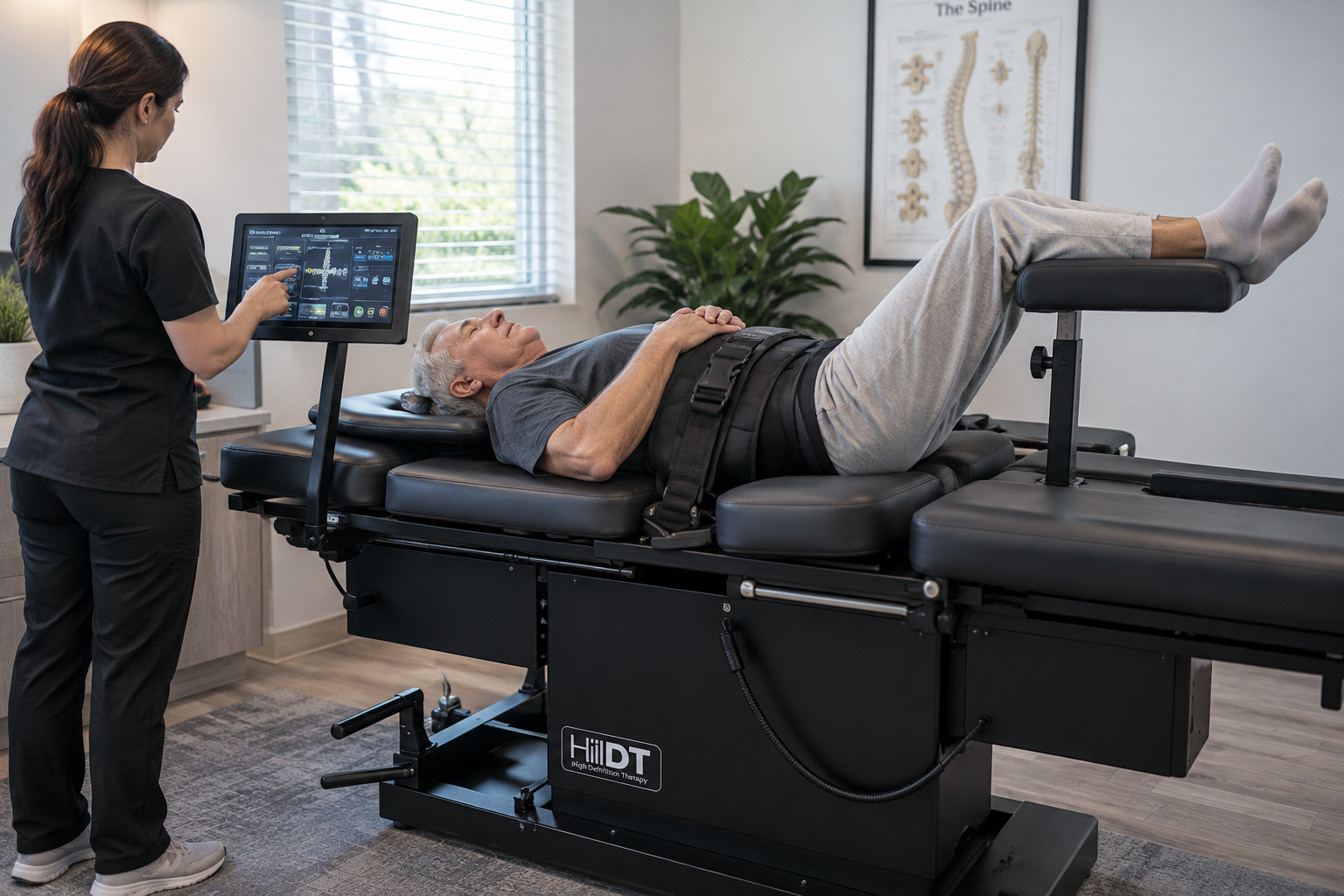
Non-surgical spinal decompression is a form of motorized traction designed to gently alter the forces affecting the spine. At Complete Performance Chiropractic, spinal decompression is used as a conservative treatment option for selected patients, particularly those experiencing conditions involving discs or nerve irritation. The clinic notes that imaging is generally performed before treatment to help determine whether decompression is appropriate.
The goal is not simply to stretch the back.
Depending on the individual’s condition, decompression may help reduce pressure affecting spinal discs and nerves while creating an environment that supports the body’s natural healing processes. This may be particularly relevant when symptoms are associated with bulging discs, herniated discs, degenerative disc disease, or certain forms of nerve compression.
However, the presence of one of these conditions does not automatically mean decompression is the best choice. Candidacy matters.
Who May Be a Good Candidate for Spinal Decompression?
There is no single symptom that determines whether someone should receive spinal decompression. Instead, candidacy is based on a combination of symptoms, examination findings, medical history, imaging when appropriate, and functional limitations.
1. People With Chronic or Persistent Back Pain
Spinal decompression may be considered when back pain has continued despite reasonable conservative efforts.
Someone who has experienced discomfort for weeks or months may have already tried modifying activities, stretching, exercise, medication, or other approaches without obtaining the improvement they hoped for.
That does not necessarily mean surgery is the next step.
For appropriately selected patients, conservative care may provide another avenue to explore. A comprehensive evaluation can help determine whether spinal decompression fits the underlying condition.
2. People With Disc-Related Problems
Disc-related conditions are among the situations where spinal decompression may be considered.
The spinal discs sit between the vertebrae and provide cushioning during movement. With aging, repetitive stress, injury, or other factors, discs can develop changes such as reduced height, bulging, or herniation.
A bulging disc occurs when the disc extends beyond its normal boundaries. A herniated disc occurs when material from inside the disc pushes through a weakened portion of its outer layer.
These changes do not always cause symptoms. In some people, however, disc changes can contribute to irritation or compression of nearby nerves.
When symptoms and examination findings suggest that disc involvement may be contributing to pain, decompression may be one conservative treatment considered as part of an individualized plan.
3. People Experiencing Sciatica or Radiating Leg Pain
Back pain that travels into the buttock or leg can sometimes indicate irritation of a lumbar spinal nerve.
This is commonly associated with sciatica or lumbar radiculopathy.
Patients may describe symptoms such as:
-
Pain traveling down the leg
-
Tingling or pins-and-needles sensations
-
Numbness
-
Burning or electrical sensations
-
Symptoms that change with sitting, standing, or certain movements
When nerve-related symptoms are associated with spinal structures that may respond to decompression, this therapy may be considered.
Importantly, radiating pain can have multiple causes. That is why identifying the source of symptoms is essential before selecting treatment.
When Degenerative Disc Disease May Make Decompression Worth Considering
Degenerative Disc Disease, commonly called DDD, is another condition that may be associated with spinal decompression candidacy.
As we age, spinal discs naturally undergo changes. They may lose some hydration, become less flexible, and gradually lose some of their height. These changes can occur even in people who have little or no pain.
However, some individuals develop symptoms involving chronic back discomfort, stiffness, reduced mobility, or nerve irritation.
In these situations, spinal decompression may be considered as part of a broader conservative approach.
At Complete Performance Chiropractic, the goal is not to treat an MRI report by itself. Instead, the evaluation considers symptoms, examination findings, imaging when appropriate, movement, and overall function. This reflects the clinic’s broader Advanced Spinal Care philosophy of looking at contributing factors rather than focusing exclusively on where pain is felt.
What About Spinal Arthritis or Spinal Stenosis?
Not every degenerative spinal condition responds to the same treatment.
Spinal arthritis, also known as degenerative joint disease, primarily affects the joints of the spine. It may contribute to stiffness, reduced mobility, and localized pain.
Spinal stenosis involves narrowing within areas of the spinal canal or nerve passageways. Depending on its location and severity, this narrowing can contribute to nerve-related symptoms.
Foraminal stenosis, for example, involves narrowing of the openings through which spinal nerves exit.
A patient with these conditions may require a more individualized assessment to determine whether decompression is appropriate. In some cases, other conservative treatments may be more suitable or may be used alongside decompression.
This is why the question should not simply be, “Do I have spinal stenosis?” A better question is, “What is causing my symptoms, and which treatment is appropriate for my specific presentation?”
Why Imaging and Evaluation Matter
One of the most important differences between generalized back pain advice and individualized spinal care is the evaluation process.
At Complete Performance Chiropractic, imaging may be reviewed when appropriate, particularly when considering spinal decompression. The clinic specifically notes that imaging is generally performed before decompression to help confirm whether the treatment is likely to be appropriate.
Imaging can provide information about the condition of the discs, vertebrae, and other spinal structures.
But an image is only one part of the picture.
A complete assessment may also consider:
-
Your symptoms and when they began
-
Where the pain travels
-
Numbness or tingling
-
Muscle weakness
-
Previous injuries
-
Previous treatment
-
Movement limitations
-
Posture and mechanics
-
Daily activities
-
Functional goals
This broader perspective helps prevent a one-size-fits-all approach.
What Are the Goals of Spinal Decompression?
Patients often ask whether decompression will “fix” their back.
A more appropriate way to look at treatment is to consider realistic goals.
Depending on the condition and individual response, spinal decompression may be used with the goals of:
-
Reducing discomfort
-
Relieving pressure on affected spinal structures
-
Supporting improved mobility
-
Reducing irritation associated with certain disc-related problems
-
Improving functional tolerance
-
Supporting a return to appropriate daily activities
Results can vary considerably between individuals. No conservative treatment should be presented as a guaranteed solution.
The purpose of an individualized plan is to determine whether the potential benefits outweigh the limitations and whether decompression makes sense for the specific patient.
How Do You Know If You Should Consider It?
If you have chronic back pain, several questions can help determine whether an evaluation is worthwhile.
Has your pain continued despite conservative efforts?
Does your pain travel into your buttock or leg?
Have you been diagnosed with a bulging or herniated disc?
Do you have degenerative disc disease?
Do you experience numbness, tingling, or other nerve-related symptoms?
Has your back pain started interfering with walking, exercising, working, sleeping, or other activities?
If the answer to several of these questions is yes, spinal decompression may be worth discussing with a qualified provider.
That does not mean decompression is automatically the correct treatment. It means your symptoms may justify a more detailed evaluation to determine what is actually contributing to your pain.
Practical Steps Before Considering Spinal Decompression
Before beginning treatment, it can be helpful to keep track of your symptoms.
Write down where the pain begins, where it travels, what activities make it worse, and what positions make it better. Notice whether you experience numbness, tingling, or weakness.
Also consider your goals.
Perhaps you want to walk farther without stopping. Maybe you want to return to golf, exercise, gardening, travel, work, or simply sleep more comfortably.
These goals matter because spinal care should be about more than a pain score. It should also consider how your symptoms affect your ability to live your everyday life.
At Complete Performance Chiropractic, individualized care is built around the patient’s condition, needs, and functional goals rather than automatically applying the same treatment to everyone.
Frequently Asked Questions About Spinal Decompression
1. Is spinal decompression appropriate for everyone with chronic back pain?
No. Chronic back pain can have many different causes. Spinal decompression may be appropriate for selected patients, particularly when symptoms and examination findings suggest disc or nerve involvement. An evaluation is necessary to determine whether it is a reasonable option.
2. Can spinal decompression help with a herniated disc?
It may be considered for selected patients with herniated discs. The appropriateness of treatment depends on the location and characteristics of the disc problem, symptoms, examination findings, and overall health.
3. Is spinal decompression the same as chiropractic care?
No. Non-surgical spinal decompression uses controlled traction to gently alter forces affecting the spine, while chiropractic care may use specific manual or instrument-assisted techniques to address joint and spinal movement. The two may sometimes be incorporated into the same individualized care plan.
4. Can spinal decompression help sciatica?
It may help selected patients whose sciatica is associated with spinal disc or nerve compression. Because leg pain can have several causes, identifying the source of symptoms is important before selecting treatment.
5. Do I need imaging before spinal decompression?
Imaging is generally performed before decompression at Complete Performance Chiropractic to help determine whether the treatment is appropriate. The exact evaluation process depends on the individual patient’s circumstances.
6. Is spinal decompression a replacement for surgery?
Spinal decompression is a conservative treatment option, not a guarantee that surgery can be avoided. Some spinal conditions require medical or surgical intervention. An appropriate evaluation can help determine whether conservative care is reasonable for your situation.
7. How long will it take to know whether decompression is helping?
There is no universal timeline because patients and conditions differ. Your response should be monitored throughout care, and the treatment plan can be adjusted based on symptoms, function, and clinical findings.
Conclusion
Spinal decompression can be an important conservative treatment option for some people with chronic back pain, but being a candidate is more important than simply having a diagnosis.
A bulging disc, herniated disc, degenerative disc disease, sciatica, or another spinal condition does not automatically mean decompression is right for you. The most appropriate approach begins with understanding the source of your symptoms, evaluating your spinal health, considering imaging when appropriate, and looking at how your condition affects movement and daily function.
At Complete Performance Chiropractic, our approach to Advanced Spinal Care emphasizes individualized evaluation and conservative treatment whenever appropriate. Spinal decompression may be one component of care, while chiropractic treatment, Class IV Laser Therapy, movement assessment, exercise, and other services may be considered when relevant to the patient’s needs.
If chronic back pain is limiting your ability to work, exercise, walk, travel, sleep, or enjoy everyday activities, you do not have to guess which treatment is right for you.
If you are experiencing persistent back pain, sciatica, radiating leg pain, symptoms associated with a bulging or herniated disc, or other degenerative spinal concerns, contact us for an evaluation.
Our team can help you better understand what may be contributing to your symptoms and whether non-surgical spinal decompression or another conservative treatment approach may be appropriate for your individual situation.
Complete Performance Chiropractic
📍 3920 S Old Highway 94, Suite 33
Saint Charles, MO 63304, United States
📞 (636) 925-1919
🌐 https://drleitman.com
The goal is not simply to treat back pain—it is to help you understand your spine, make informed decisions about your care, improve function where possible, and stay active for the long term.