You swing your feet out of bed, take your first step, and a sharp, stabbing pain shoots through your heel. After a few minutes of walking it eases, only to come back after you sit for a while or spend a long day on your feet. If that sounds familiar, you may be dealing with plantar fasciitis, one of the most common causes of heel pain in adults.
The good news is that most people improve with conservative care. At Complete Performance Chiropractic in St. Charles, MO, we help people find the source of their heel pain and build a plan to get them walking comfortably again. This guide explains what plantar fasciitis is, how to recognize it, and the plantar fasciitis treatment options that do not involve surgery.
What Is Plantar Fasciitis and Why Does It Develop?
The plantar fascia is a thick band of tissue that runs along the bottom of your foot, from your heel bone to your toes. It supports the arch and absorbs shock every time you take a step.
When that tissue is placed under too much strain, small areas of irritation and micro-tears can develop where it attaches to the heel. Over time this leads to pain, stiffness, and inflammation. Plantar fasciitis usually builds gradually rather than starting from a single injury.
Common Symptoms of Plantar Fasciitis
The hallmark symptom is pain on the bottom of the heel. Many people notice:
- Sharp heel pain with the first steps in the morning: the fascia tightens overnight, so the first few steps stretch it suddenly.
- Pain after rest: discomfort returns when you stand up after sitting for a long time.
- Pain after activity: heel pain that flares after exercise or a long shift, rather than during it.
- Tenderness: soreness when you press on the inside of the heel or along the arch.
- Stiffness: a tight feeling in the arch or heel that improves as you warm up.
Risk Factors for Plantar Fasciitis
Anything that increases stress on the bottom of the foot can raise your risk. Common risk factors include:
- Prolonged standing: jobs that keep you on your feet on hard surfaces for hours at a time.
- Improper footwear: shoes with thin soles, poor arch support, or worn-out cushioning, as well as going barefoot on hard floors.
- Repetitive physical activity: running, jumping, and other high-impact exercise, especially after a sudden increase in mileage or intensity.
- Foot mechanics: flat feet, high arches, or an unusual walking pattern.
- Tight calves and Achilles tendons: limited ankle flexibility puts more pull on the fascia.
- Body weight: extra weight increases the load on the heel with every step.
Plantar Fasciitis vs. Other Causes of Heel Pain
Not all heel pain is plantar fasciitis. Several other conditions can feel similar, which is why a proper evaluation matters:
- Heel spurs: bony growths on the heel bone that often appear alongside plantar fasciitis but are not always the source of pain.
- Achilles tendinitis: pain at the back of the heel rather than underneath it.
- Stress fractures: pain that gets worse with activity and does not ease as you warm up.
- Nerve irritation: burning, tingling, or numbness can point to a pinched nerve in the foot or ankle, or to a problem higher up such as the lower back.
- Fat pad thinning: a deep, bruise-like ache in the center of the heel.
Identifying which of these is behind your pain helps make sure your treatment targets the real problem.

Conservative Plantar Fasciitis Treatment Options
According to the American Academy of Orthopaedic Surgeons, most people with plantar fasciitis get better with non-surgical treatment. A conservative plan may include:
- Rest and activity changes: reducing high-impact exercise while the tissue calms down.
- Supportive footwear: shoes with good arch support and cushioning, and avoiding going barefoot on hard floors.
- Stretching: regular calf and plantar fascia stretches, especially before your first steps in the morning.
- Ice: applying cold to the heel after activity to ease soreness.
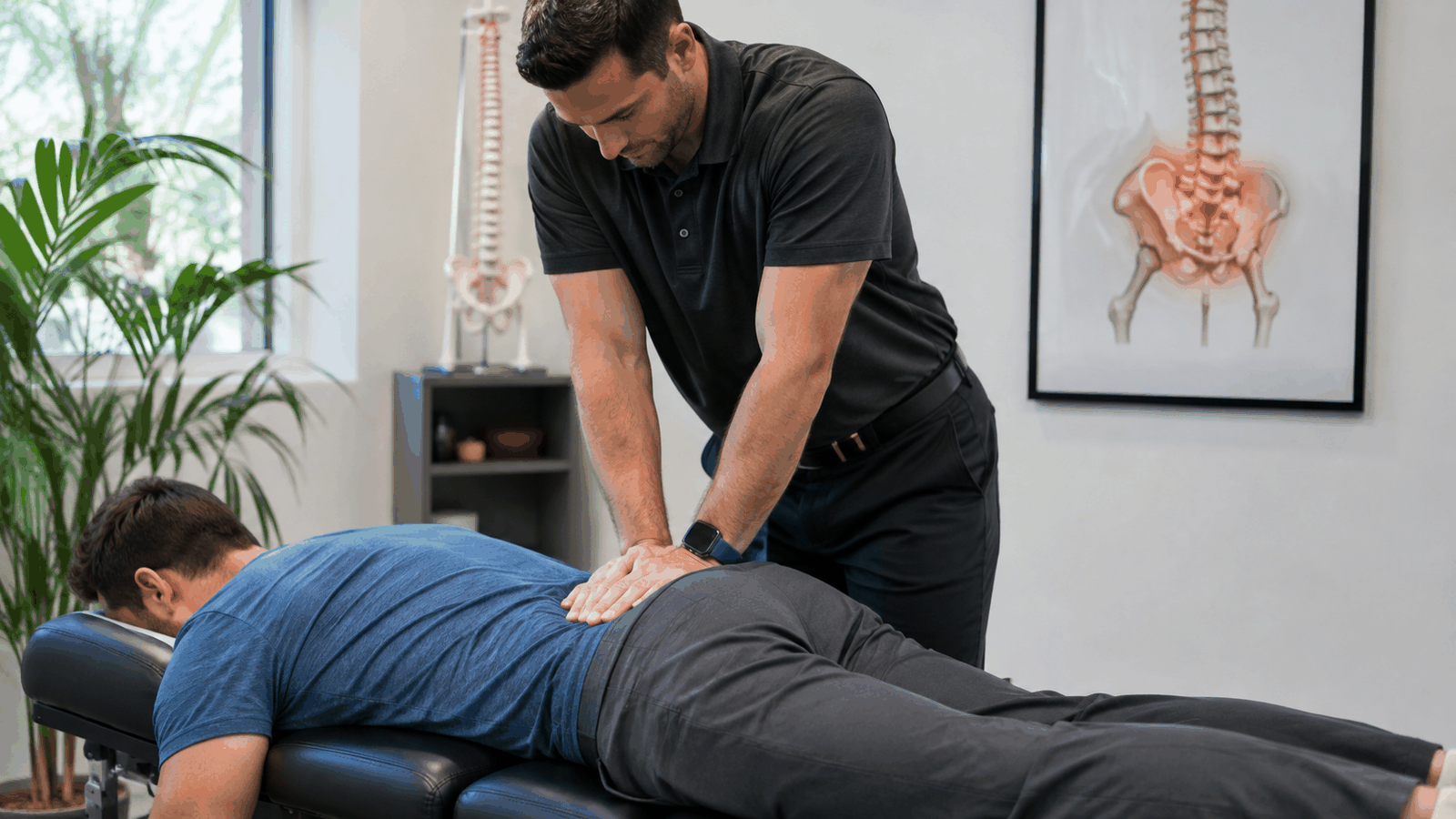
- Chiropractic care: a chiropractic evaluation looks at how your feet, ankles, knees, hips, and spine work together, since problems elsewhere can change the way you load your heel.
Rehabilitation
Rehabilitation focuses on restoring flexibility and strength so the fascia is not overloaded again. This often includes calf and foot stretches, exercises to strengthen the small muscles of the foot, and gradually returning to normal activity. The Mayo Clinic notes that stretching and strengthening are a core part of recovery.
Laser Therapy
For heel pain that has not improved with home care, Class IV laser therapy may be an option where appropriate. The laser delivers light energy to the irritated tissue and is non-invasive. It is usually combined with stretching, rehabilitation, and footwear changes rather than used on its own.
When to Get Your Heel Pain Checked
Consider an evaluation if your heel pain lasts more than a few weeks, keeps you from walking or exercising normally, or comes with numbness, tingling, or swelling. You can learn more about how we approach ankle and foot pain, or call our office at (636) 925-1919 to schedule a visit.
At Complete Performance Chiropractic in St. Charles, MO, our goal is to find the cause of your heel pain and help you walk comfortably again without surgery.