
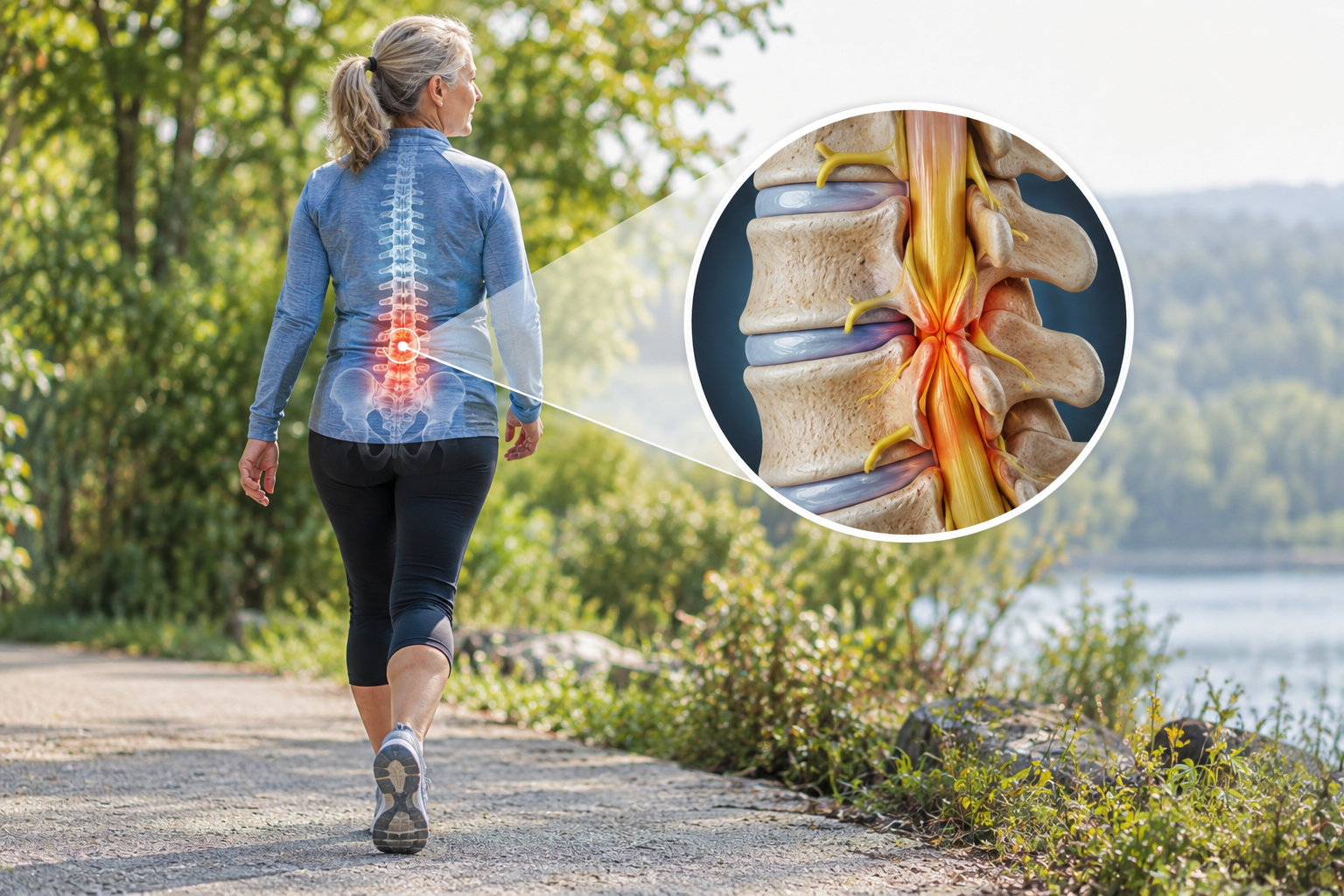
Living with spinal stenosis can change the way you approach everyday activities. Walking through the grocery store, standing while cooking dinner, getting out of the car, taking a morning walk, or spending time with family can become more difficult when back or leg symptoms interfere with movement.
Spinal stenosis occurs when spaces within the spine become narrower, which can place pressure on the spinal cord or nearby nerves. It is most commonly associated with age-related changes, including arthritis, degenerative joint changes, disc changes, and bone growth. Symptoms can vary considerably. Some people experience back pain or stiffness, while others may develop numbness, tingling, weakness, or discomfort that travels into the legs.
A diagnosis of spinal stenosis does not automatically mean you have to stop being active. In fact, maintaining appropriate movement and developing supportive daily habits can be an important part of managing your condition.
At Complete Performance Chiropractic, our approach to spinal care begins with understanding what may be contributing to your symptoms rather than focusing only on the location of pain. Our team uses individualized evaluations and conservative care strategies to help appropriate patients work toward better mobility and daily function.
Understanding Spinal Stenosis
Spinal stenosis is a narrowing of the spaces through which the spinal cord and spinal nerves travel. It most frequently affects the cervical spine in the neck or lumbar spine in the lower back.
Lumbar spinal stenosis can be particularly noticeable during standing or walking. Some people experience pain, heaviness, tingling, or weakness in the buttocks and legs. Symptoms may improve when sitting or leaning forward because these positions can change the amount of space available around affected structures.
Cervical spinal stenosis can produce symptoms involving the neck, shoulders, arms, hands, or, in more significant cases, balance and coordination.
The important point is that spinal stenosis does not affect everyone in exactly the same way. Imaging findings alone do not always explain how a person feels or functions. A comprehensive evaluation can help connect the diagnosis with symptoms, movement patterns, and functional limitations.
Why Everyday Habits Matter
When spinal stenosis causes discomfort, it can be tempting to avoid movement altogether. Unfortunately, becoming increasingly inactive may create another set of problems.
Less activity can contribute to reduced strength, decreased endurance, joint stiffness, and loss of confidence with movement. Over time, ordinary tasks may feel increasingly difficult.
Instead of thinking about activity as something that has to be eliminated, consider how it can be modified.
The goal is not to push through significant pain. The goal is to find forms of movement that your body tolerates and gradually build your ability to perform meaningful daily activities.
1. Break Up Long Periods of Sitting
Sitting for extended periods can contribute to stiffness, particularly after remaining in one position for a long time.
If your daily routine involves a desk, television, long drives, or extended computer use, consider changing positions regularly. Stand up, walk around the room, stretch gently, or perform another comfortable movement before returning to your activity.
For people who experience symptoms with prolonged sitting, frequent position changes may be more comfortable than staying in one posture for hours.
At work, consider adjusting your chair and workstation so that your feet are supported and your screen is positioned comfortably. During long car rides, plan periodic breaks when possible.
2. Find a Walking Pattern Your Spine Tolerates
Walking is an important part of maintaining general mobility, but spinal stenosis can make traditional walking difficult for some people.
Rather than focusing on walking a specific distance, pay attention to how your symptoms respond.
A shorter walk may be more manageable than one long walk. For example, three 10-minute walks throughout the day may be easier than attempting one continuous 30-minute walk.
Some people with lumbar spinal stenosis also find that slightly leaning forward makes walking more comfortable. This may explain why certain individuals tolerate walking with a shopping cart better than walking upright.
Your walking strategy should be individualized. If walking consistently causes worsening pain, numbness, weakness, or other concerning symptoms, an evaluation is appropriate.
3. Use Support During Activities When Appropriate
Simple changes to your environment can make daily activities easier.
If standing for long periods aggravates symptoms, consider using a supportive surface or sitting periodically. When shopping, a cart may provide support and allow you to change your posture. At home, organize frequently used items so you do not have to repeatedly reach, bend, or twist.
These adjustments are not signs that you are giving up. They are practical ways to conserve energy and remain involved in activities that matter.
4. Maintain Strength Without Overloading Your Spine
Strength plays an important role in maintaining independence as we age.
However, someone with spinal stenosis should not automatically copy an exercise program designed for someone without a spinal condition. Certain movements may aggravate symptoms depending on the location and severity of narrowing.
A better approach is to identify exercises and activities that support your functional goals while respecting your symptoms.
Depending on your individual situation, strengthening the muscles around the hips, abdomen, and lower body may support better movement and stability. Gentle mobility work may also help reduce stiffness.
The appropriate exercise strategy should depend on your diagnosis, current abilities, symptoms, and overall health.
Pay Attention to Your Body’s Signals
One of the most useful habits when living with spinal stenosis is learning the difference between productive activity and activity that may be aggravating your condition.
Mild muscle fatigue after appropriate exercise can be normal. However, increasing numbness, significant weakness, sharp radiating pain, or symptoms that consistently become worse with an activity deserve attention.
Keeping a simple record of your symptoms can also be helpful.
For example, note:
How far you can walk before symptoms appear
Which positions make symptoms better or worse
Whether sitting provides relief
How long you can comfortably stand
Which household activities are difficult
Whether symptoms affect sleep
Whether numbness or weakness is changing over time
This information can help your healthcare provider better understand how spinal stenosis is affecting your daily life.
Focus on Function, Not Just Pain
A common mistake is to measure progress only by asking, “Does my back hurt today?”
Pain is important, but function provides another valuable measurement.
Can you walk farther than before? Can you stand long enough to prepare a meal? Can you get through the grocery store more comfortably? Can you participate in hobbies or spend more time with your family?
These practical improvements may be meaningful even when some discomfort remains.
At Complete Performance Chiropractic, our philosophy is to look at the larger picture of spinal health and function. Our website emphasizes personalized care plans and evaluation of the factors contributing to pain rather than treating symptoms in isolation.
How Conservative Spinal Care May Fit Into Your Plan
Not every person with spinal stenosis needs the same treatment.
At Complete Performance Chiropractic, an evaluation may consider your symptoms, physical examination findings, movement patterns, and other relevant information. This helps determine which conservative options may be appropriate.
Chiropractic Care
Individualized chiropractic care may be considered to support spinal and joint mobility and address mechanical contributors to discomfort. The specific techniques used should depend on the patient’s condition rather than applying the same approach to everyone.
Functional Movement Assessment
Understanding how you move can be especially valuable when the goal is to remain active.
A Functional Movement Assessment can help identify movement patterns, mobility limitations, or other factors that may influence how you perform everyday activities. That information can help guide recommendations around movement and activity.
Class IV Laser Therapy
Class IV Laser Therapy may be incorporated into appropriate treatment plans when inflammation, discomfort, or soft-tissue concerns are part of the overall clinical picture.
At Complete Performance Chiropractic, this therapy uses red and near-infrared wavelengths and may support circulation, reduce swelling and discomfort, and support tissue repair.
Axial Spinal Decompression
Axial Spinal Decompression may be considered for selected patients when disc-related problems or nerve compression are contributing to symptoms.
Because spinal stenosis involves narrowing around spinal structures, decompression is not automatically appropriate for everyone with a stenosis diagnosis. A thorough evaluation is important before deciding whether this approach belongs in an individualized care plan.
The objective of conservative spinal care is not to promise a cure or reverse age-related changes. Instead, appropriate care may help reduce discomfort, support mobility, reduce mechanical stress on affected structures, and improve the ability to participate in daily activities.
Know When to Seek Medical Attention
Spinal stenosis can range from mild symptoms to more significant nerve-related problems.
Seek prompt medical evaluation if you develop new or progressively worsening weakness, significant changes in sensation, difficulty coordinating your movements, or other neurological changes.
Emergency evaluation is especially important when back problems are accompanied by sudden loss of bladder or bowel control, numbness in the saddle area, or rapidly progressing weakness.
These symptoms should not be managed through home exercises alone.
Frequently Asked Questions About Living With Spinal Stenosis
Can I still exercise if I have spinal stenosis?
In many cases, appropriate physical activity can remain part of an active lifestyle. The type, intensity, and duration of exercise should be individualized according to symptoms, diagnosis, overall health, and functional ability.
Is walking good for spinal stenosis?
Walking can be beneficial for maintaining mobility and general health, but some people with lumbar spinal stenosis find prolonged upright walking uncomfortable. Shorter walks, frequent breaks, or modified positioning may be better tolerated.
Should I avoid bending forward if I have spinal stenosis?
Not necessarily. Some people with lumbar spinal stenosis actually experience temporary symptom relief when leaning forward. However, the ideal movement strategy depends on your individual presentation.
Can spinal stenosis get better without surgery?
Conservative care may be appropriate for selected patients, depending on the severity of symptoms and underlying condition. Treatment may focus on managing discomfort, supporting mobility, improving function, and addressing contributing mechanical factors. Surgery may still be necessary in certain situations.
Can chiropractic care help with spinal stenosis?
Chiropractic care may be appropriate for some patients as part of a broader conservative care plan. Because spinal stenosis varies significantly between individuals, a thorough evaluation is important before determining which techniques are appropriate.
Should I stop being active when my back hurts?
Not automatically. Complete inactivity can contribute to stiffness and reduced conditioning. The better approach is often to modify activities and identify movements that can be performed comfortably. Significant or worsening symptoms should be evaluated.
When should I have my spinal stenosis evaluated?
Consider an evaluation if persistent back or leg symptoms interfere with walking, standing, sleeping, working, exercising, or other activities you value. Early assessment can help clarify what may be contributing to your symptoms and what conservative options may be appropriate.
Conclusion
Living with spinal stenosis does not necessarily mean giving up the activities that make everyday life meaningful. With the right habits, many people can continue working toward mobility, independence, and an active lifestyle while learning how to manage their symptoms.
Start with practical changes: avoid staying in one position for too long, break longer activities into manageable periods, pay attention to your body’s signals, maintain appropriate strength and mobility, and modify activities when necessary.
Most importantly, do not assume that every case of spinal stenosis requires the same solution.
At Complete Performance Chiropractic, our approach to advanced spinal care focuses on understanding the individual rather than treating an imaging diagnosis by itself. Our services include individualized chiropractic care, Functional Movement Assessment, Class IV Laser Therapy, and non-surgical Axial Spinal Decompression for selected patients.
If persistent neck or back pain, leg symptoms, numbness, or stiffness is making it harder to walk, exercise, work, travel, or enjoy your normal routine, consider scheduling an evaluation. Understanding the source of your symptoms is an important first step toward developing an appropriate plan for maintaining your mobility and quality of life.
If spinal stenosis or persistent back and leg pain is affecting your daily activities, our team at Complete Performance Chiropractic can help you better understand your condition and explore appropriate conservative spinal care options.
Complete Performance Chiropractic
📍 Address: 3920 S Old Highway 94, Suite 33, Saint Charles, MO 63304, United States
📞 Phone: (636) 925-1919
🌐 Website: drleitman.com
Schedule a consultation to discuss your symptoms, movement limitations, and whether an individualized approach to spinal care may be appropriate for you.